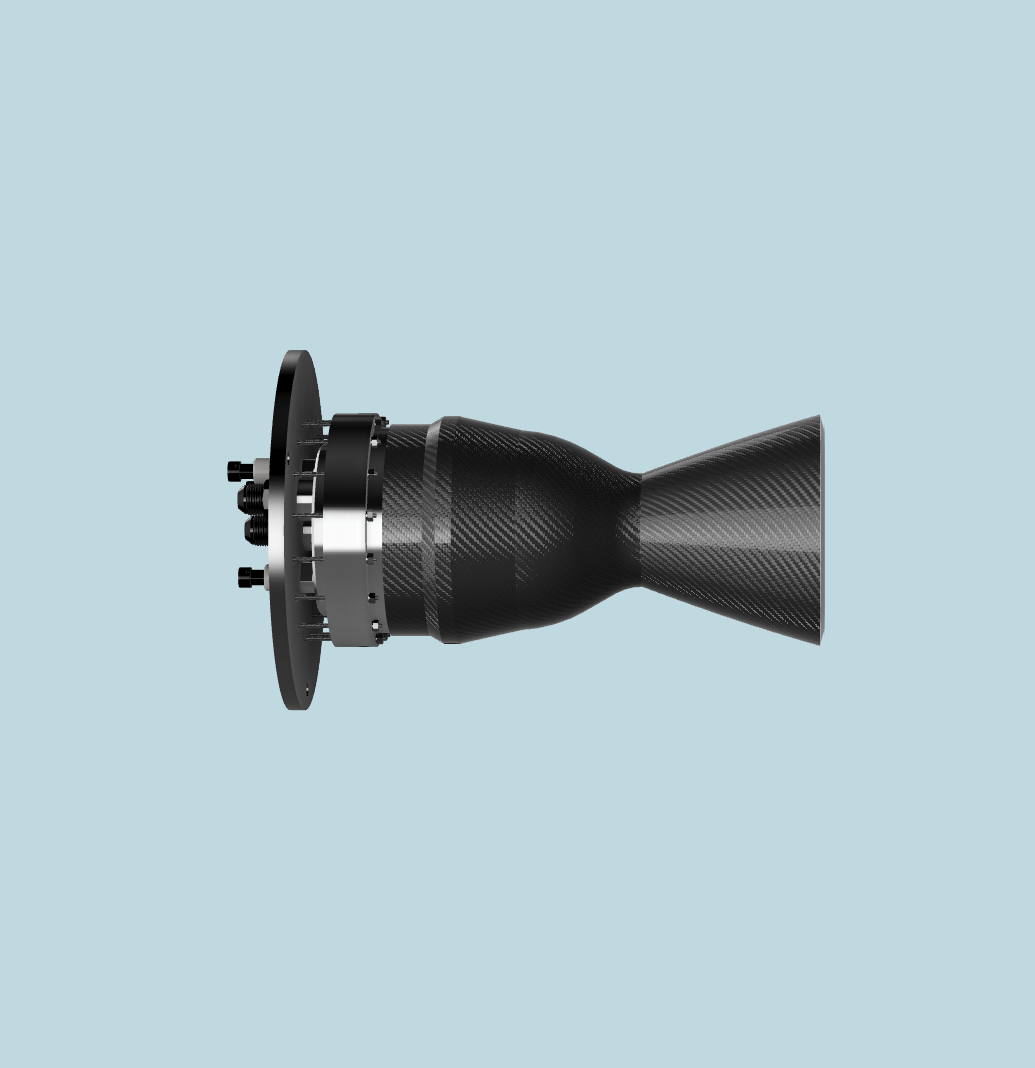
Onyx
Carbon Fiber, In-house Manufactured Spaceshot Engine
-
![]()
A Wild Idea
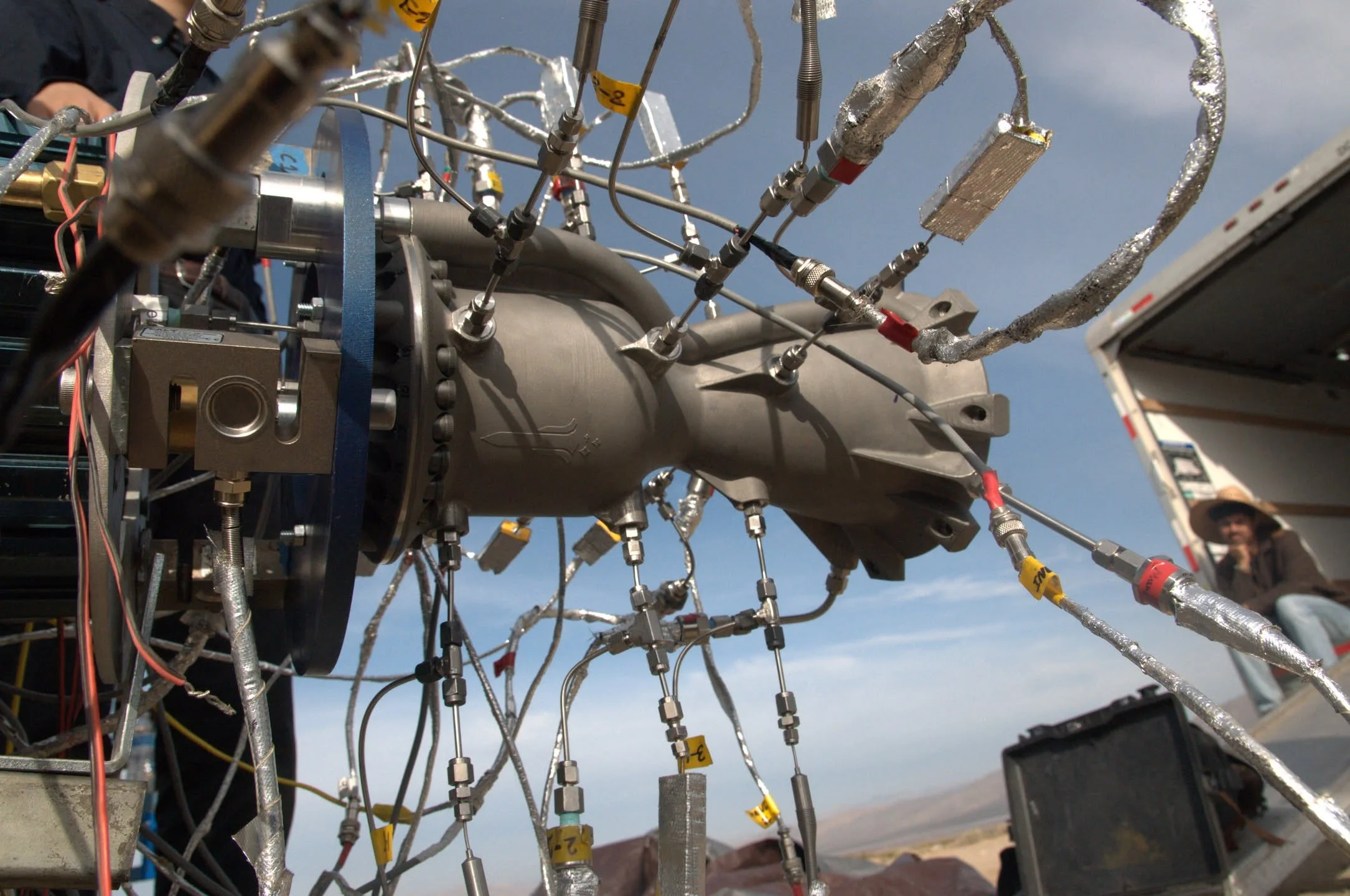
With the team’s founding mission to bring space to the amateur collegiate-level rocketry (besides making STEM education more accessible), developing an efficient, lightweight engine is a priority. Our original 11kN regeneratively cooled space-shot engine, Heavybulb 2.1, was descoped due to mass concerns related to Inconel 3D printing, which gave birth to a composite-based engine. Carbon fiber immediately stood out as a wild, non-industry-standard option, but its intersection between incredible strength and lightweight turned it from a pipe-dream into a research project.
-
![]()
Making It Work
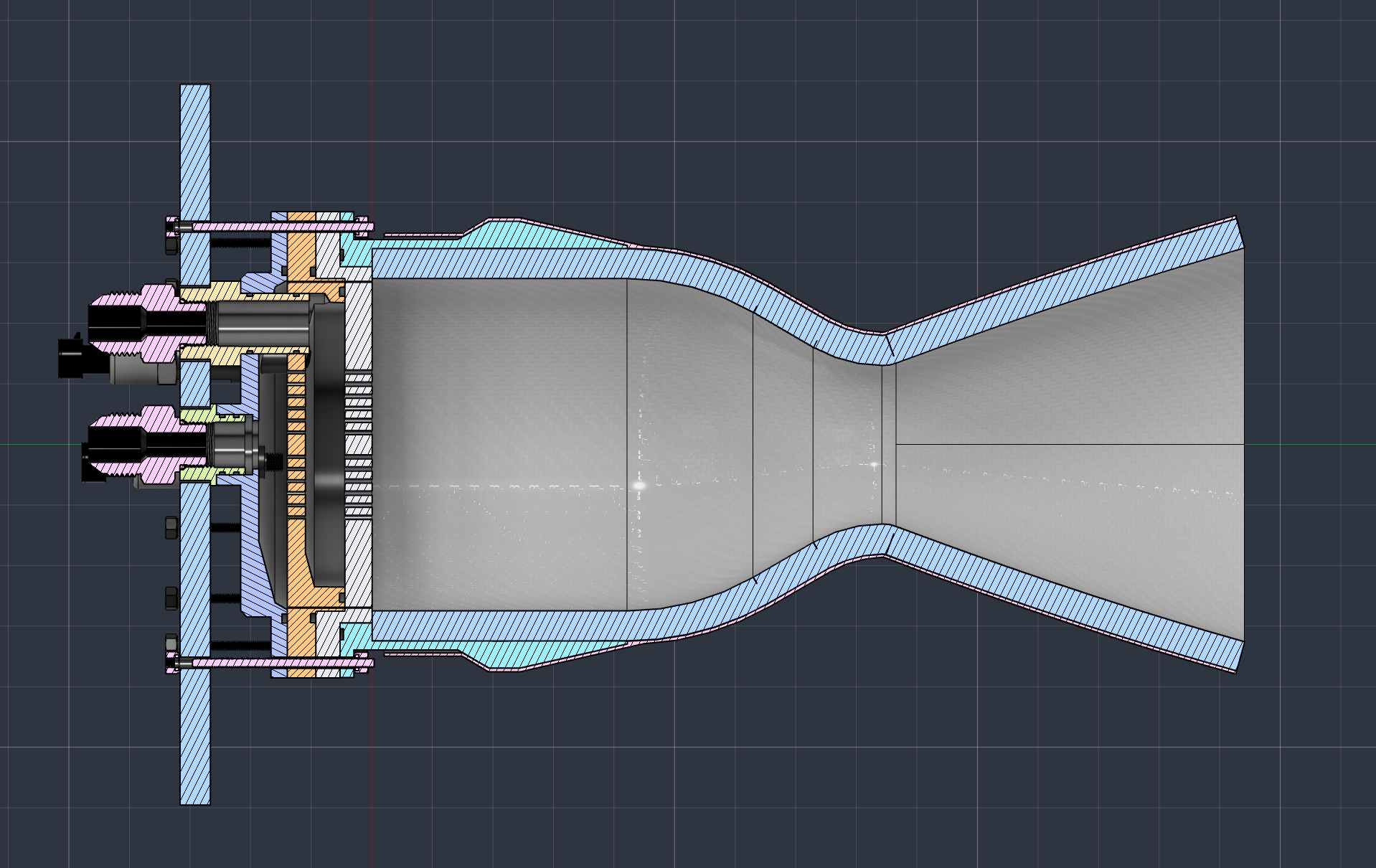
The idea of a composite engine dates back to the team’s history, but real progress began in May of 2026, with a small group of members eager to make it work. Research into SpaceX’s first Merlin 1A and 1B ablative engines wound out of carbon fiber propelled progress, and, after scouring countless research papers published by NASA and other independent researchers and testing various designs in RPA, we landed on a Carbon Fiber Composite engine with a phenolic ablative liner and a 3D-printed coaxial shear injector fueled with Isopropyl Alcohol and Nitrous Oxide.
-
![]()
Design
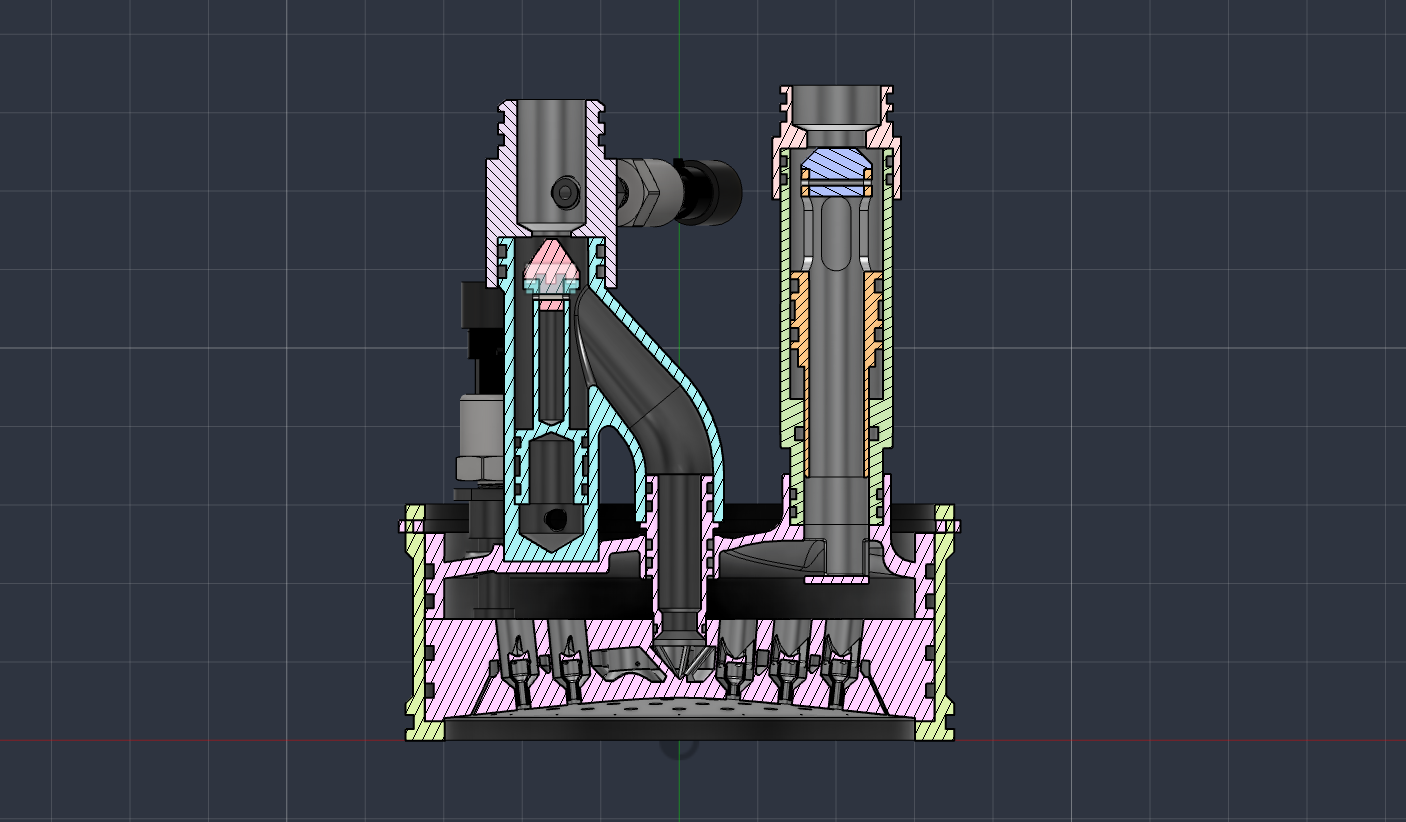
Primarily working on the injector, I iterated through several different designs. Originally, I polished an old 3D-printed coaxial swirl injector design adapted from Heavybulb. This then shifted towards a focus on manufacturing the injector in-house with a lathe, among other machine shop machinery. Compared to a coaxial shear or pintle design, a coaxial swirl injector design was developed due to the engine efficiency boost it would bring to an IPA-NOS-based system, which introduces the challenges of two-phase flow on the oxidizer side. Despite developing a design that upheld this theory, attention shifted to a coaxial shear design that, despite its lower theoretical efficiency, would be much easier to test and validate. In all cases, in-house manufacturability remained at the core of this injector design.
-
![]()
Next Steps
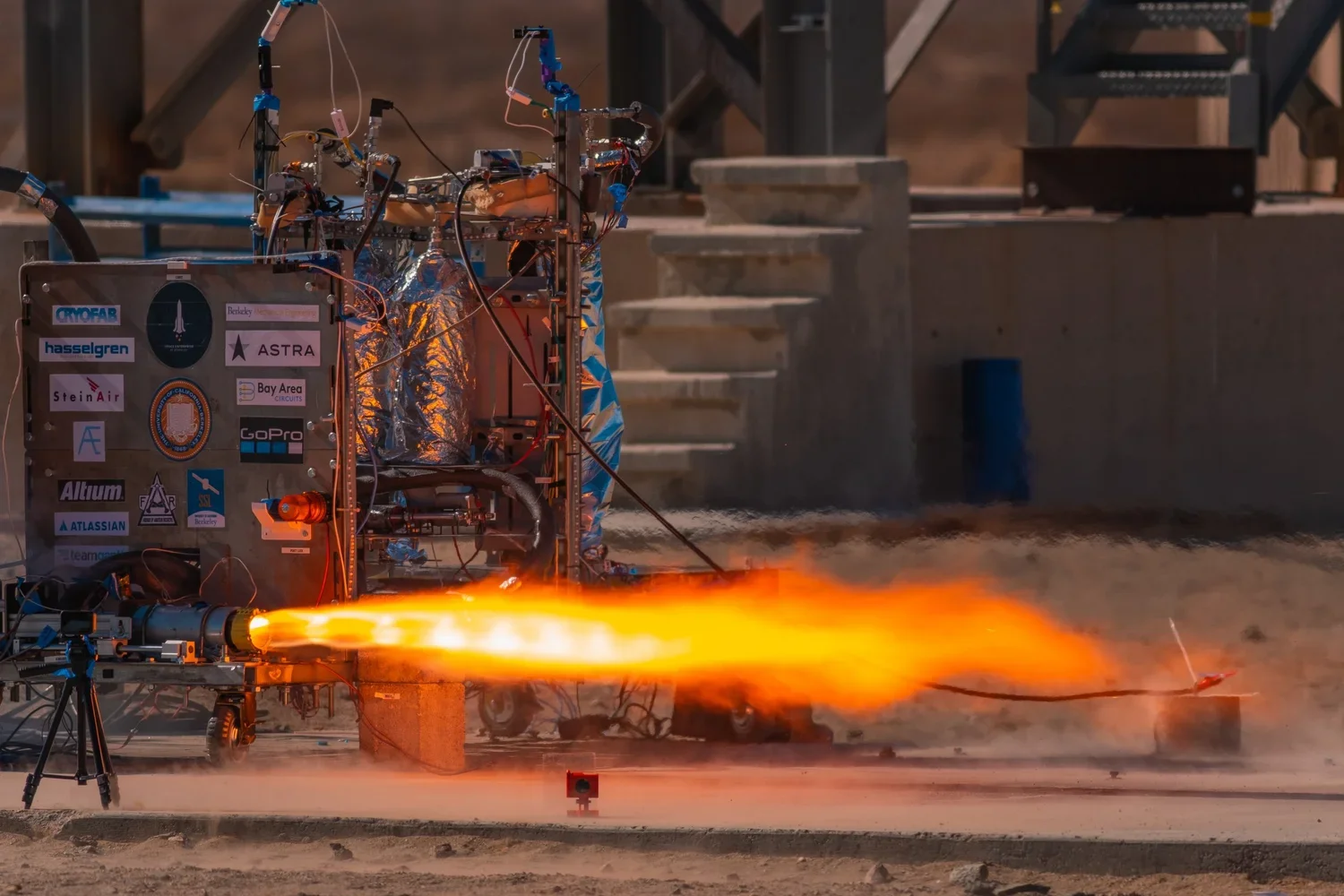
Taking hold of this project as RE, I grew the three-man operation into a team of around 30+ members working on various tasks from calculating the required thickness of carbon fiber to ensure hoop-stress criteria are met, to simulating propellant flow through the injector using Ansys Fluent, to experimenting with laying up various gores of CF on a scaled-down replica of the engine contour. The coaxial shear turnable (on a lathe) injector CAD is mostly finalized, and the engine design is heading towards a full-scale Technical Design Review. Once the design is approved, we will begin manufacturing and testing on our Cart system designed to flow and fire new engine prototypes.